

Indigenous yeasts give wine a distinctive local character. They offer aromatic potential and authenticity, but require strict control throughout the winemaking process. Here is a practical guide to when to use them, how to manage them, and a concrete protocol for minimizing risks.
What are indigenous yeasts?
Indigenous yeasts are microorganisms naturally present on grape skins and in the winery environment.
With spontaneous fermentation, these naturally occurring yeasts are allowed to initiate and carry out the transformation of must (grape juice) into wine, without the addition of alternative yeasts.
What exactly is the role of indigenous yeasts?
Indigenous yeasts are responsible for alcoholic fermentation: they convert the sugars in the must into alcohol. They also produce volatile compounds (esters, acids, aldehydes) that directly influence the wine’s aromatic profile. This fermentation is the first crucial stage in transforming grapes into wine. It is known as spontaneous fermentation.
Why use spontaneous fermentation?
The main motivation for winemakers is to express the terroir: native yeasts can contribute to the development of aromas that are potentially specific to a particular place. It is both a technical and stylistic choice, rather than a guarantee of consistently superior quality. Spontaneous fermentation requires appropriate conditions and careful monitoring.
Managing spontaneous fermentation
When indigenous yeasts come into contact with the must, they consume the sugars to produce alcohol and carbon dioxide, initiating fermentation. But their role goes beyond this chemical transformation. Yeasts also release compounds that directly influence the wine’s aromas. These volatile compounds (esters, acids, aldehydes) shape its aromatic profile. Oxidation-reduction reactions can also transform aroma precursors into aromatic compounds.
In practice, winemakers monitor these processes closely to preserve the wine’s balance.
To understand how this winemaking process works in practice in an urban winery, read our article: Winemaking in the City: How Is Wine Made in an Urban Winery in Lyon?
Risks to be aware of
Working with spontaneous fermentation involves greater uncertainty. The main risks include:
- Incomplete fermentation
- Production of undesirable aromas
- Development of unwanted microorganisms
These risks do not occur systematically; they depend heavily on the health and quality of the harvested grapes, winery hygiene, and careful oenological monitoring.
According to studies conducted by the French Institute of Vine and Wine (Institut Français de la Vigne et du Vin), yeast diversity does not necessarily result in greater aromatic complexity. In fact, too many different yeast strains can prolong fermentation and produce undesirable compounds, potentially affecting the quality of the wine.
How to manage spontaneous fermentation
Successful spontaneous fermentation depends on carefully managing several essential factors:
- Healthy, high-quality grapes: The grapes must be free from diseases or contaminants that could disrupt fermentation.
- Clean and sanitized winemaking equipment: Keeping tanks and equipment clean is crucial to prevent unwanted contamination.
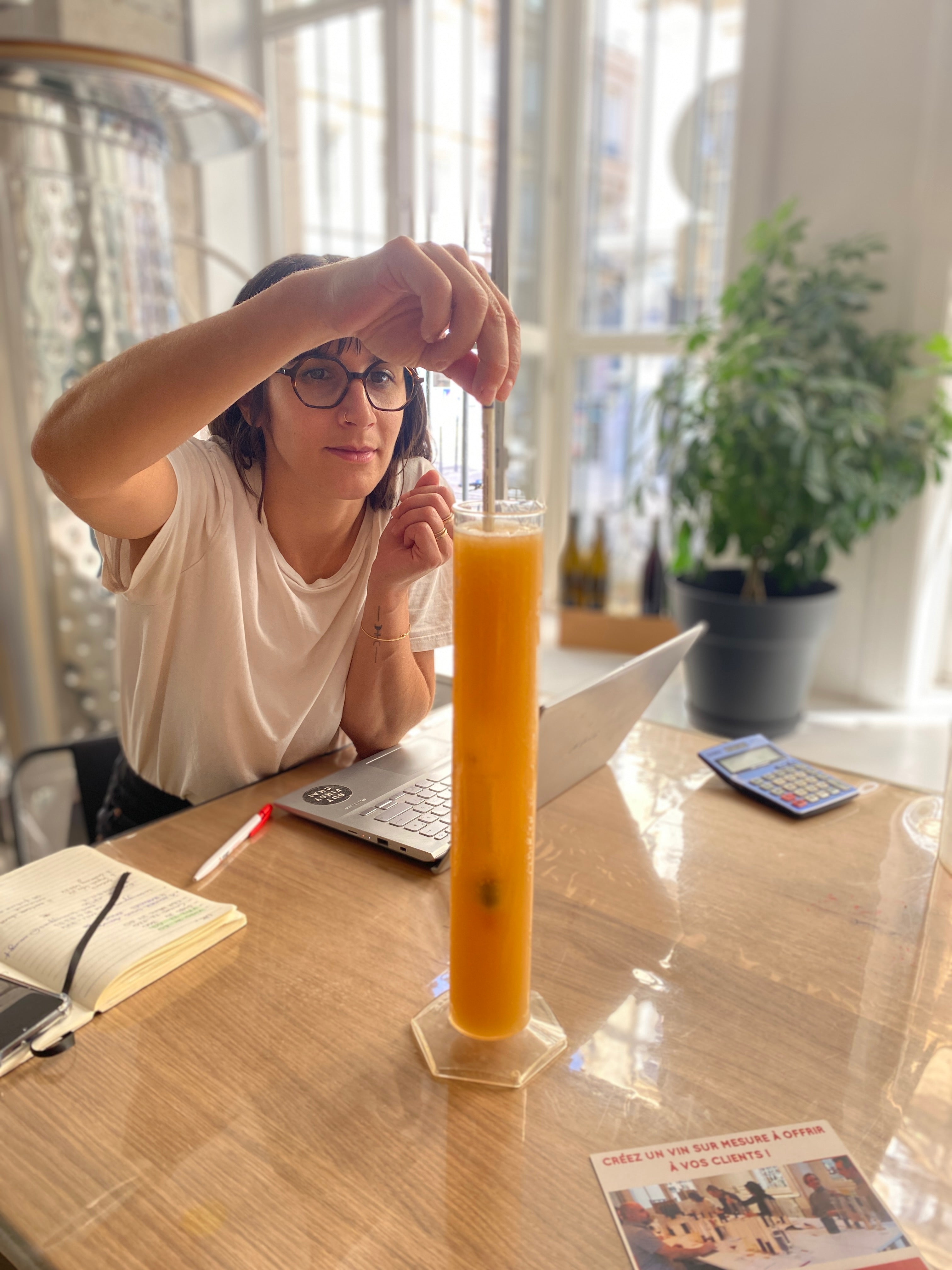
- Constant fermentation monitoring: The winemaker must regularly monitor the temperature and density of the must to ensure that fermentation is progressing correctly and efficiently. Daily tasting is also essential to detect any potential aromatic faults.
- Using a fermentation starter (pied de cuve): This technique involves inoculating the must with a small quantity of actively fermenting must containing a thriving local yeast population. This helps fermentation start quickly and reduces the risk of undesirable microorganisms taking over.
Discover our wines produced in Lyon
Exogenous yeasts: when and why should they be used?
When should they be used?
Exogenous yeasts are often added when spontaneous fermentation is difficult to control or when specific winemaking conditions require them, such as musts with very high sugar levels or high acidity.
Why choose exogenous yeasts?
Although indigenous yeasts are often preferred to preserve the identity of the terroir, some wineries choose to add exogenous yeasts. These selected yeast strains are introduced to ensure a clean, reliable fermentation. They also provide greater control over the wine’s aromatic profile, although they can sometimes limit the pure expression of terroir.
Contrary to a common misconception, these are not “chemical yeasts.” They are selected yeast strains originally isolated from naturally occurring populations.
They can introduce a certain degree of uniformity, potentially at the expense of the diversity and distinctive characteristics associated with indigenous yeasts.
Conclusion: a deliberate choice
Choosing to use indigenous yeasts in winemaking is a deliberate decision—a return to traditional practices that emphasizes the unique character of the terroir. However, it requires constant monitoring and precise management at every stage of fermentation. While indigenous yeasts are not a foolproof solution, they can help produce authentic wines that faithfully reflect the identity of the vineyard.
Exogenous yeasts, on the other hand, offer greater consistency but may limit the expression of terroir. This is a trade-off that winemakers need to consider according to their objectives.
Frequently asked questions about indigenous yeasts
What is spontaneous fermentation?
Spontaneous fermentation is fermentation carried out by the naturally occurring microorganisms—particularly indigenous yeasts—present on the grapes and in the winery, without the initial addition of selected yeast strains.
How can you tell if an indigenous yeast fermentation is progressing properly?
Winemakers monitor the density of the must (as sugar levels gradually decrease), temperature, visible activity (foam and bubbles), and, above all, the aromatic profile through tasting. Any unusual odors, such as rotten egg aromas or strong reductive notes, require immediate investigation.
Does a fermentation starter (pied de cuve) guarantee success?
A fermentation starter reduces risk by encouraging an active population of local yeasts, but it does not eliminate all risks. It should be used as part of a broader approach that includes strict hygiene and careful fermentation monitoring.
Are indigenous yeasts synonymous with “natural” wines?
No. The term “natural” does not have a single definition in this context. Indigenous yeasts refer to a fermentation method and do not automatically imply specific viticultural or winemaking practices, such as organic farming or making wine without added sulfites.

Join us on social media: