

Rosé is a light and refreshing wine that has gained popularity in recent years. What is it like? When should you drink it? What are its benefits? In this article, we answer these questions and invite you to discover Lyon's first rosé.
Rosé wine: how is it made?
The rosé production process differs slightly from that of red and white wines. Rosé is made from red grapes . These grapes are pressed directly, resulting in a lighter-colored juice. This is called direct pressing, similar to the production of white wine. In all cases, the grapes destined for rosé wine are harvested earlier than those for red wines. This helps retain a certain acidity in the juice, which is important for its production.
It is also possible to carry out a short maceration to give more color and structure to rosé wine . In this case, the harvested grapes are placed whole (or destemmed) in a vat and macerate for 24-48 hours, then pressed for vinification.
The method of rosé winemaking depends on the region where it is produced and the style of wine the producer wants.
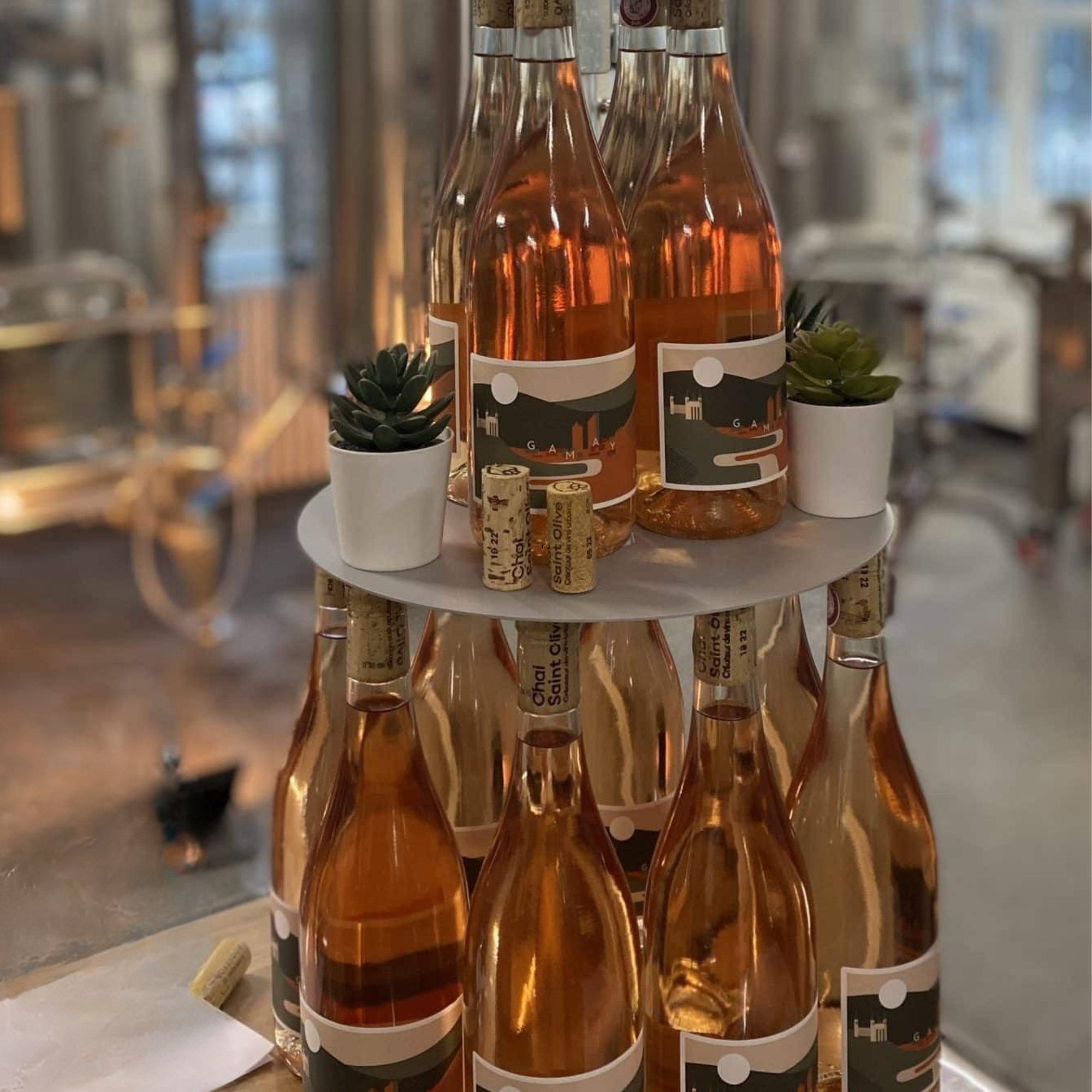
The rosé wine production process can vary depending on the region and the producers' preferences. An example is the new Lyon vintage from Franck and Grégoire Saint Olive, founders of the Lyon urban winery – Chai Saint Olive.
Rosé from Chai Saint Olive
At Chai Saint Olive, we offer a rosé wine made from the Gamay grape variety, harvested in the Beaujolais region, specifically in the Pierres Dorées area. The vines are planted in cool, schist and clay soils (northeast-facing), resulting in a vibrant, refreshing, and delicious wine.
We use direct pressing and natural alcoholic fermentation at low temperatures. Malolactic fermentation in our rosé wine adds roundness and creaminess.
The SO2 is adjusted to allow for good preservation but the doses remain relatively low (19ml/L).
Finally, the wine is clarified with a light filtration, but there may still be a small deposit of tartar at the bottom of the bottle, which does not detract from its quality.
The result: This rosé boasts aromas of red fruit and citrus. The minerality of this urban wine is well-balanced with its sweetness. It's a pleasant, supple, and refreshing wine.
When to drink rosé?
Rosé wine is often associated with summer due to its refreshing character and bright, light color. It's frequently served chilled, making it perfect for warm days. Furthermore, it pairs beautifully with summer dishes such as salads, seafood, and grilled meats.
However, the versatility of rosé should not be underestimated. It can also be enjoyed during the cooler months of the year, especially when paired with autumn and winter dishes such as cheese dishes, grilled meats, and spicy dishes.
With the arrival of warmer weather, the rosé wine is brought out.

What are the benefits of rosé wine?
Rosé wine has many virtues . First, it is light and easy to drink, making it an ideal choice for social occasions and light meals. It can also be served chilled, making it a refreshing drink for hot summer days.
Rosé wine is often associated with fruity and floral flavors, making it very versatile in terms of food pairings . It pairs well with light dishes such as salads, seafood, and white meats, as well as with spicy dishes and summer foods like grilled meats and roasted vegetables.
Rosé wine boasts a high antioxidant and resveratrol content. These compounds have been linked to beneficial effects on cardiovascular health and anti-cancer properties. Of course, wine consumption should remain moderate.
In conclusion, rosé wine is a delicious and refreshing wine that offers a wide variety of flavors and aromas. Made from red grapes, it can vary in color and style depending on the producer's preferences. Versatile in terms of food pairings, rosé wine is an ideal choice for many occasions.

Share on social networks: