
Vinification: The Know-How Behind Each Cuvée
From vine to glass, each bottle tells a story. That of grape varieties carefully harvested, then patiently transformed into exceptional wines.
But before being tasted, the wine is born in the heart of the cellar , during a precise, technical and exciting process: vinification.
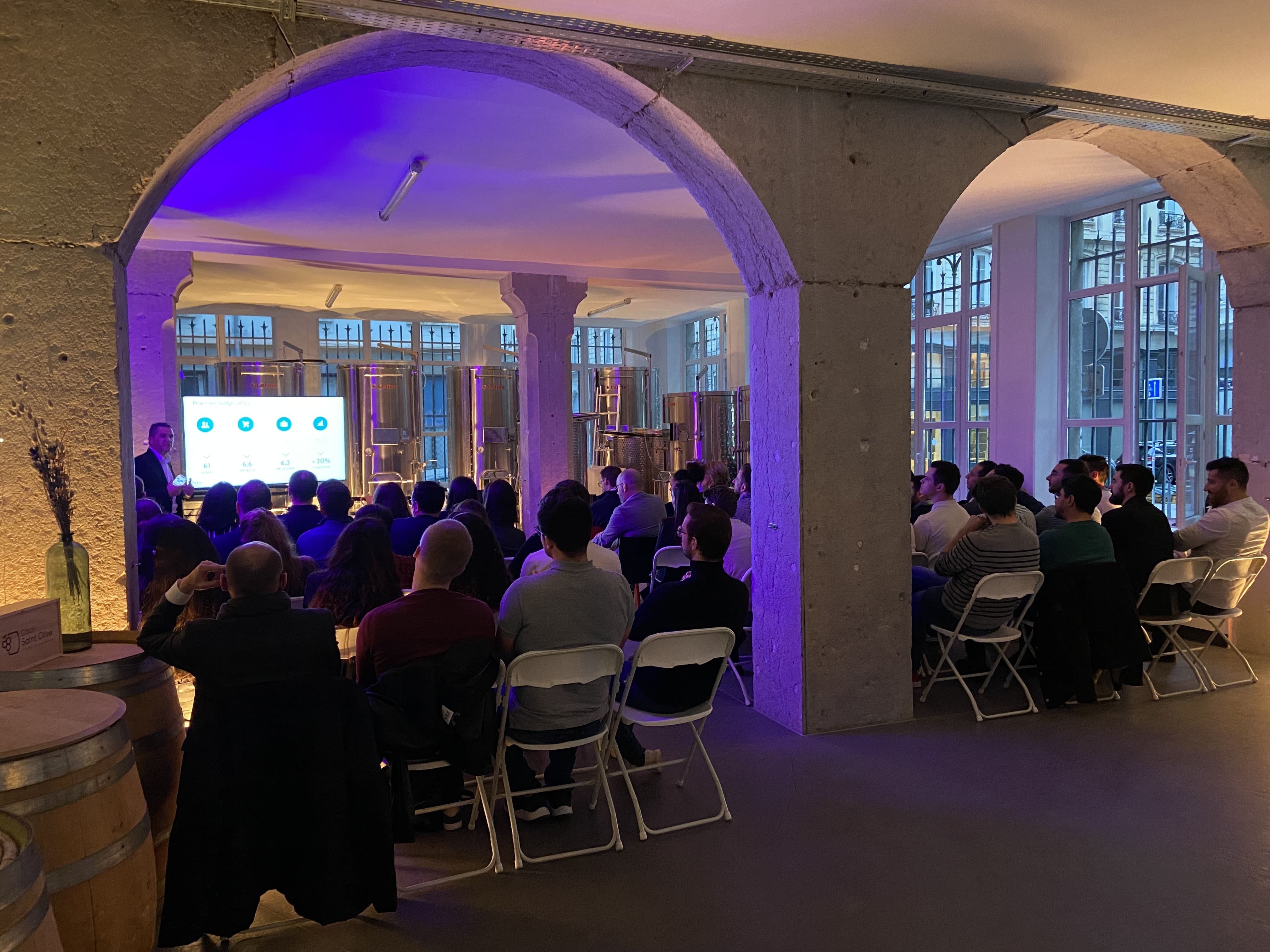
In a context where local and responsible consumption is taking on its full importance, we are reinventing winemaking in an urban environment, with the same requirements as a country estate.
At the heart of winemaking in Lyon's first urban cellar
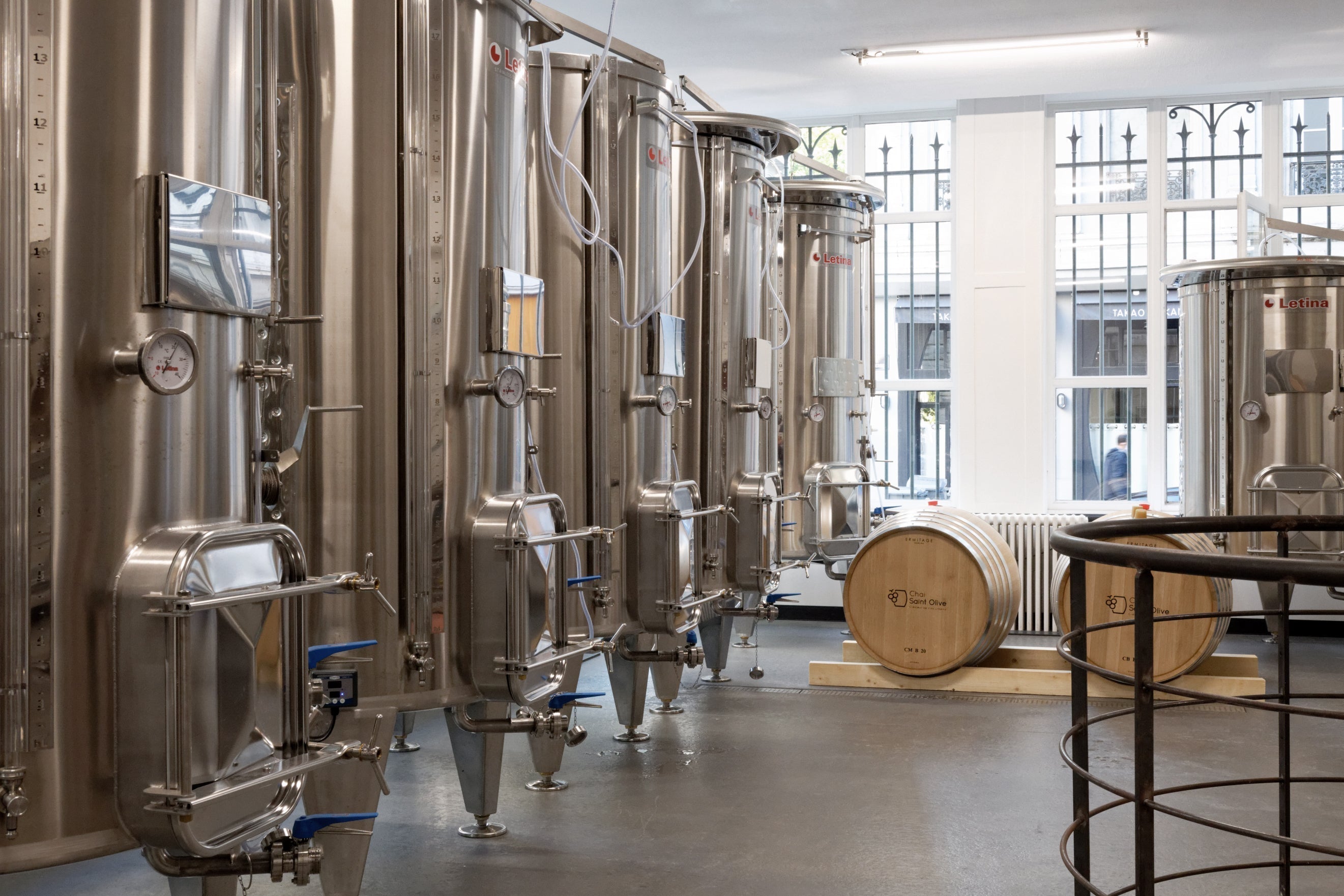
At Chai Saint Olive, every detail counts. Each stage of winemaking combines technical rigor with respect for the Rhône terroir. From the local harvest less than 80 km from our urban cellar to our stainless steel vats, oak barrels and our terracotta amphora , our process adapts to reveal the uniqueness of each grape variety.
Discover our “Vin de France in Lyon” approach to understand how we bring the city and the vineyard together.
Winemaking process: key steps and customization
There winemaking East the art of transforming grape juice in wine through a set of techniques. This process follows a structured diagram which varies depending on the type of wine desired (red, white, rosé or sparkling).
At Chai Saint Olive, we work on five levers: temperature, duration, vat, barrel, amphora. Every technical decision is made to enhance the grape variety and the terroir.
- Harvesting and sorting : manual or mechanical harvesting at our partner winegrowers to guarantee quality upon receipt.
- Pressing / maceration : depending on the style required (direct for white, long maceration for red).
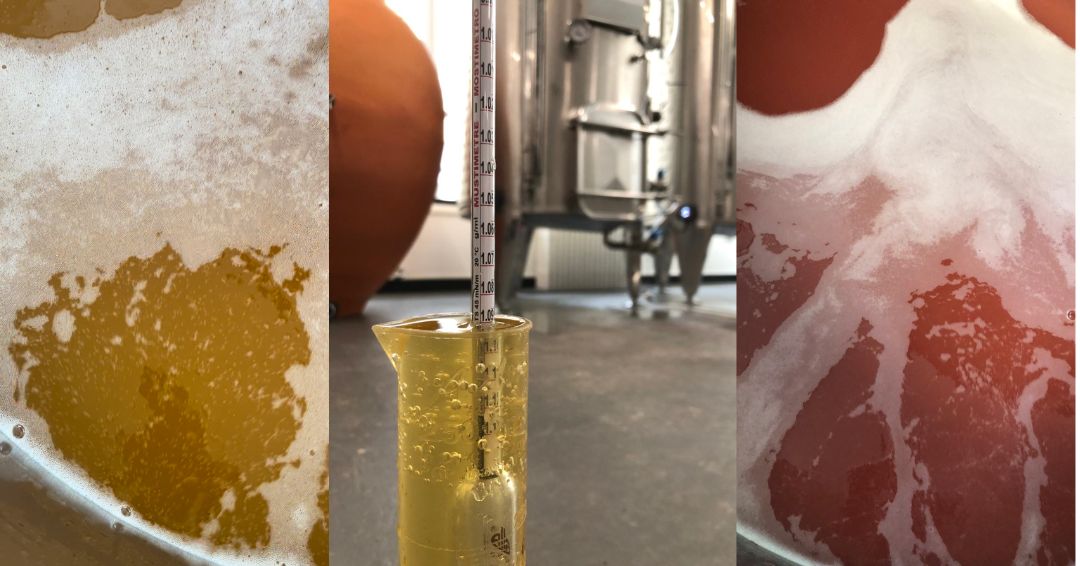
- Alcoholic fermentation : thermo-regulated stainless steel vats or oak barrels, at controlled temperature.
- Malolactic fermentation : natural conversion of malic acid into lactic acid by bacteria (slow action at 18–20 °C), softening the acidity and enhancing the roundness. Partial on certain aromatic whites (Viognier, Sauvignon), systematic for reds.
- Aging : stainless steel, oak, or terracotta to enhance texture and aromas.
- Harvesting, pressing, fermentation, aging, bottling : each step plays a key role in the final expression of the wine.
But behind this winemaking scheme, hides a lesser-known reality: The methods differ greatly depending on the color of the wine.
Red wine vs. white wine: two complementary approaches
Red wine vinification: controlled extraction and structure
For red wines, the main objective is to extract tannins, color and aromas contained in the skin of the grape. This is why the skins, the seeds and sometimes the stalks are left in contact with the juice during fermentation.
The process follows several steps:
- Destemming and crushing : the berries are separated from their stems and then the grapes are lightly crushed to release the juice.
- Maceration : the solid parts of the grape (skins, seeds) are kept in the vat with the juice to promote extraction .
- Alcoholic fermentation : yeasts transform sugar into alcohol. The temperature is strictly controlled to preserve the aromas.
- Punching down or pumping over : these operations allow to stir the marc , promote oxygenation and strengthen the structure of the wine.
- Malolactic fermentation : it softens the wine by transforming malic acid into lactic acid.
- Breeding : in vats, barrels or amphorae, it refines the texture and makes the aromas more complex.
Result: a structured, intense wine, with sometimes powerful but always balanced tannins.
White wine vinification: purity, finesse and precision
Unlike red, The vinification of white wine is done without maceration with the skins , or over a very short time. The objective is to preserve the freshness, liveliness and aromatic brilliance .
Share on social networks: